Specimen Grips & Materials Test Fixtures
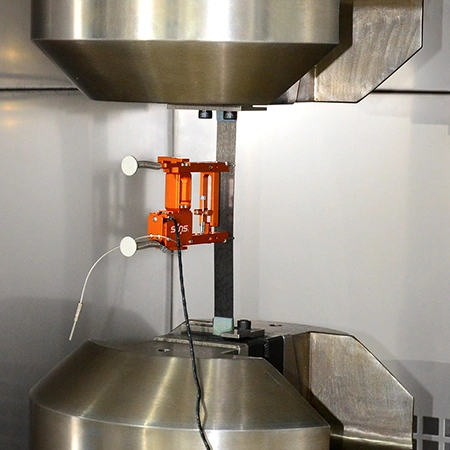
Composite Tensile Testing
- Applicable Standards: ASTM D3039, ASTM D3518, ISO 527-4, ISO 14129, GB/T 1447, GB/T 1040, GB/T 3354, GB/T 3355, EN 2561
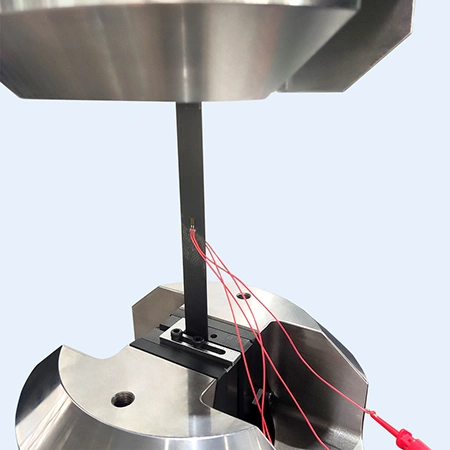
- Test Parameters: Maximum Force, Tensile Strength, Elastic Modulus, Poisson’s Ratio
- Strain Measurement Options: Strain Gauge / Clip-On Extensometer / Video Extensometer
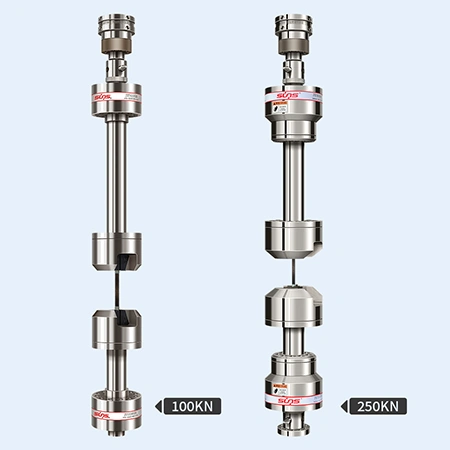
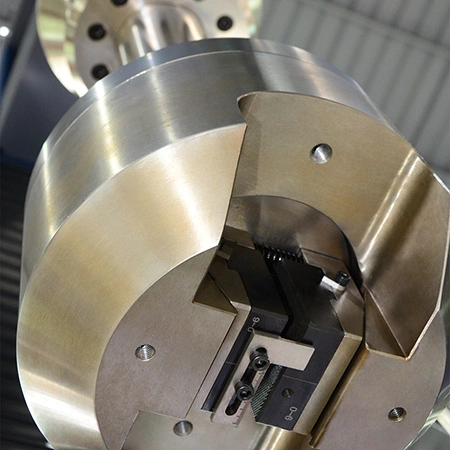
- Hydraulic Grip Options:
- 100 kN / 250 kN Ambient-Temperature Hydraulic Grips
- 100 kN / 250 kN Full-Temperature Hydraulic Grips (-70°C to 350°C / -70°C to 550°C)
- Jaw Options: Flat Jaws, 0–8 mm / 8–16 mm
Composite Monofilament / Multifilament / Tow / Glass Fiber Tensile Testing
- Applicable Standards: ISO 11566 (Carbon Fiber Monofilament Tensile Testing), GB/T 3362 (Carbon Fiber Multifilament Tensile Testing), GB/T 7690.3 (Glass Fiber Tensile Testing), FZ/T 50007 (Spandex Filament Tensile Testing)
- Test Parameters: Strength, Modulus, Elongation
- Deformation Measurement Options: Contact Extensometer / Video Extensometer
-
Fixture Options:
- Pneumatic grips are preferred to provide consistent clamping force and improve test repeatability.
- Pneumatic Parallel Push Grips: for monofilament, multifilament and spandex filament testing
- Pneumatic Winding Grips: for glass fiber testing
Tensile Grips
-
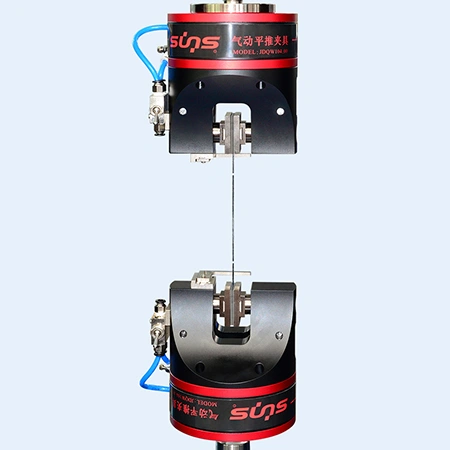
Pneumatic Side Action Grips GB/T 3362, GB/T 34520.4 -
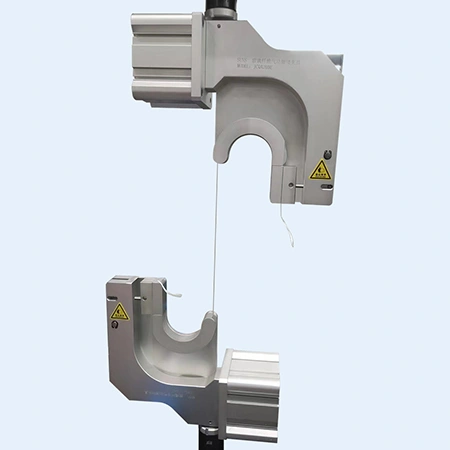
Pneumatic Capstan Grips (Linear Density >500 tex) GB/T7690.3 -
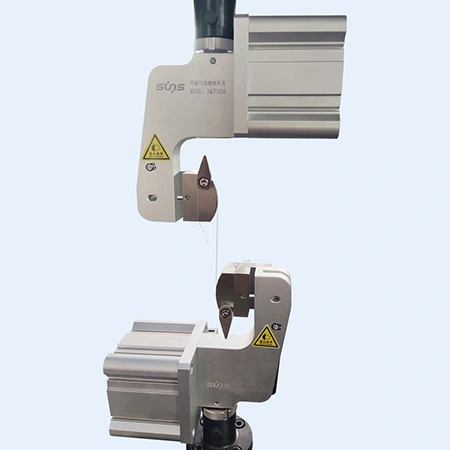
Pneumatic Cord and Yarn Grips (Linear Density <500 tex) GB/T7690.3 -
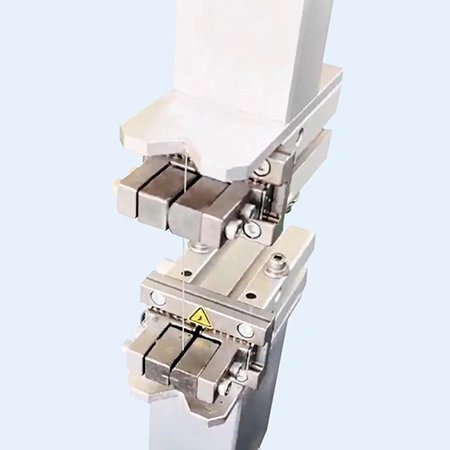
Pneumatic Tensile Grips ISO 11566, FZ/T 50007
Composite Flexural Testing
- Applicable Standards: ASTM D790, ASTM D6272, ASTM D7264, ASTM D2344, ISO 14125, ISO 14130, ISO 178
- Test Parameters: Flexural Strength, Flexural Modulus
- Deformation Measurement Options: Dial Indicator / Deflectometer
Flexural Test Fixtures
-
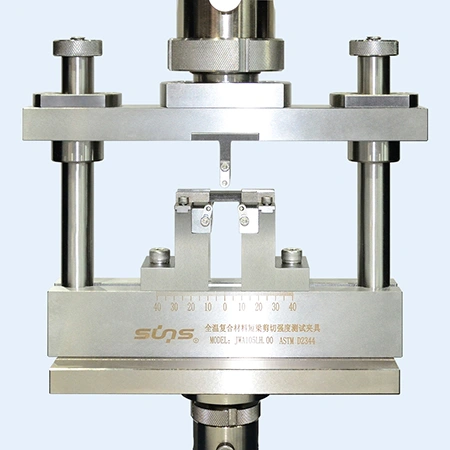
Short Beam Shear Test Fixture (3-point Flexural Fixture) ASTM D2344 -
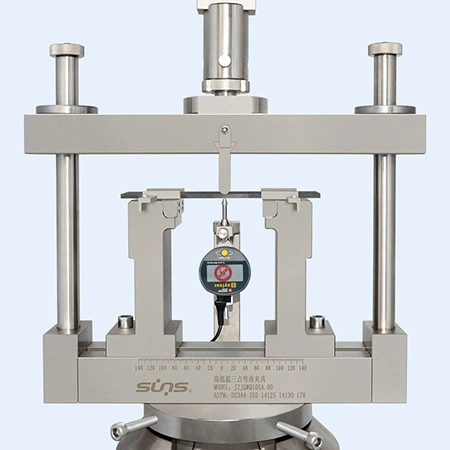
3-point Bend Fixture with Dial Indicator ASTM D790, ISO 14125, ISO 14130, ISO 178, GB/T 9341-2008 -
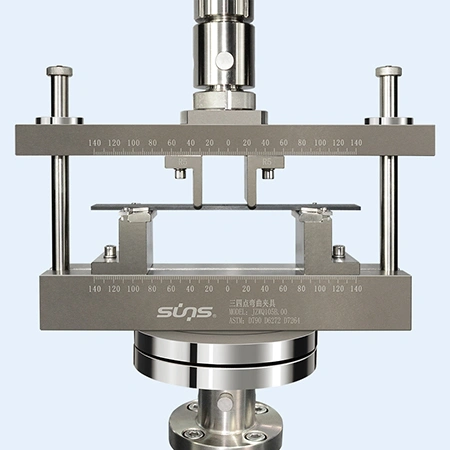
4-point Bend Fixture ASTM D6272, ASTM D7264 -
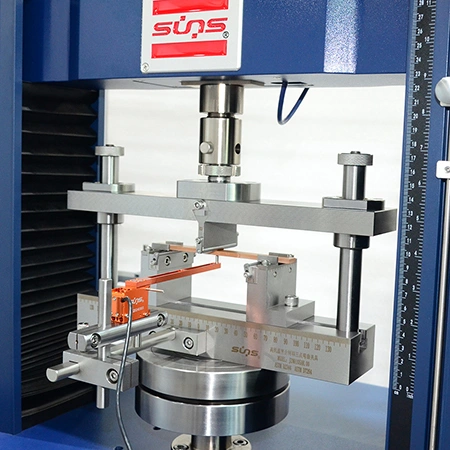
High/Low Temperature 3-Point Bending Fixture with Deflectometer ASTM D2344, ASTM D7264
Composite Compression Testing
- Applicable Standards: ASTM D6641, ASTM D695, ASTM D3410, ISO 14126, GB/T 5258, GB/T 3856, EN 2850, SACMA SEM 1R
- Test Parameters: Maximum Force, Compressive Strength, Elastic Modulus, Poisson’s Ratio
- Deformation Measurement Options: Strain Gauge/Video Extensometer (Small Field of View, Telecentric Lens, High Precision)
Compression Test Fixtures
-
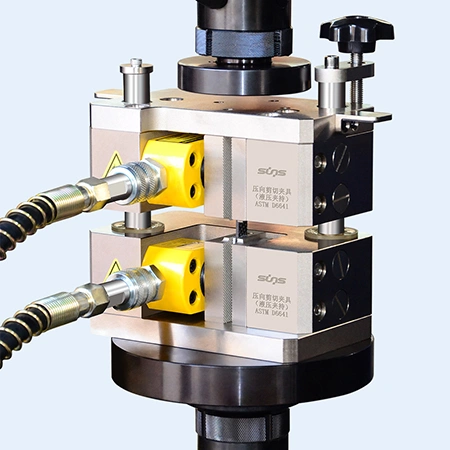
Combined Loading Compression Fixture (Hydraulic Gripping) ASTM D6641 -
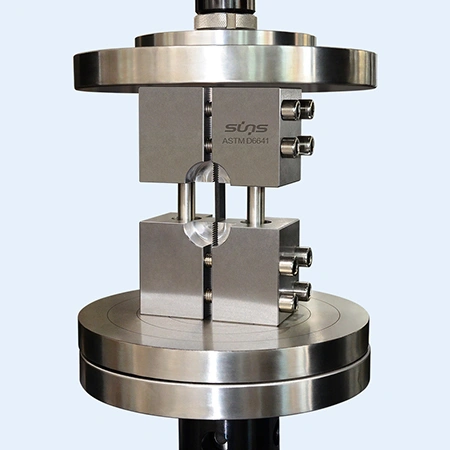
Combined Loading Compression Fixture ASTM D6641 -
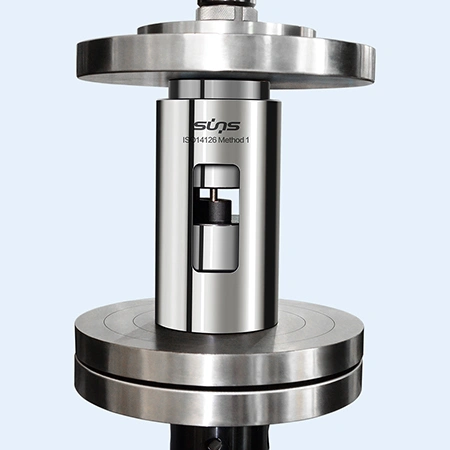
Shear Loading Compression Fixture ISO 14126, GB/T 3856 -
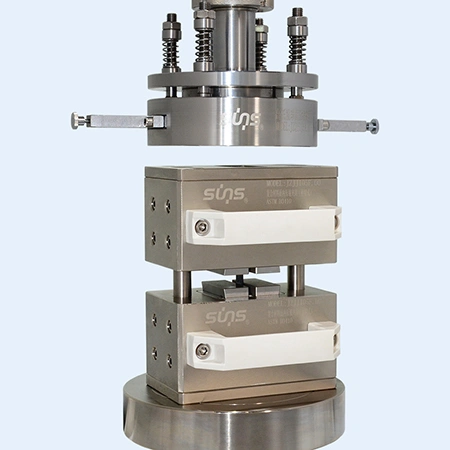
Shear Loading Compression Fixture ASTM D3410 -
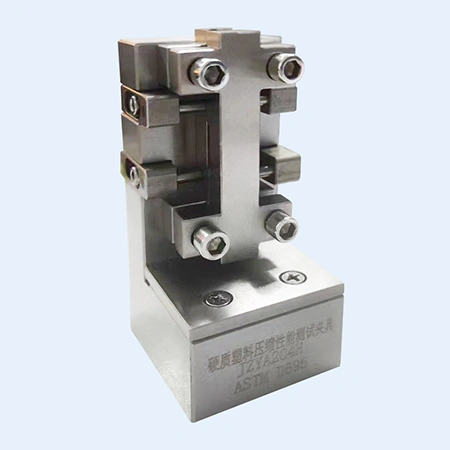
End Loading Compression Fixture ASTM D695
Composite Shear Testing
- Applicable Standards: ASTM D5379, ASTM D7078, ASTM D3518, ISO 14129
- Test Parameters: Shear Strength, Elastic Modulus
- Strain Measurement Options: Strain Gauge
Shear Test Fixtures
-
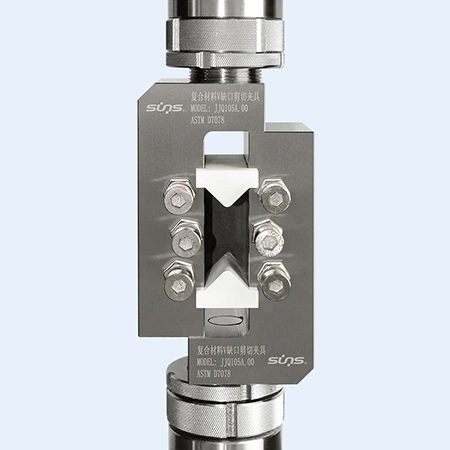
V-Notched Rail Shear Fixture ASTM D7078 -
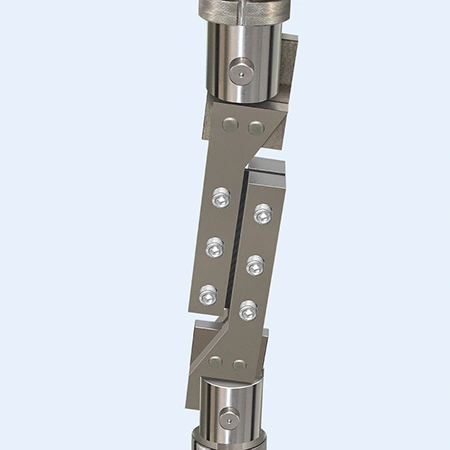
Two-Rail Shear Fixture (Procedure A) ASTM D4255 -
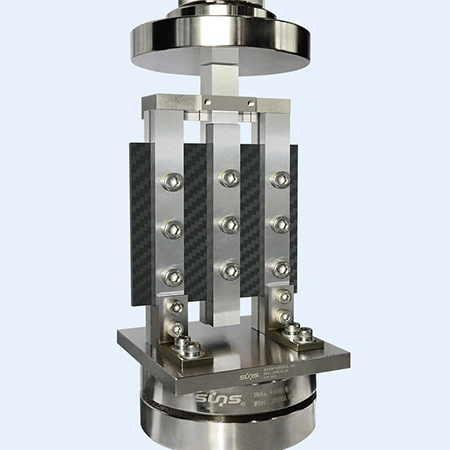
Three-Rail Shear Fixture (Procedure B) ASTM D4255 -
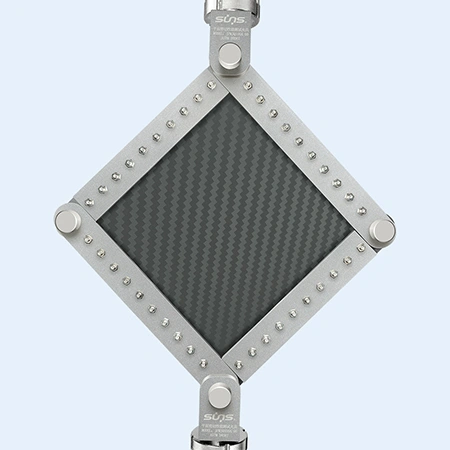
Picture-Frame Shear Test Fixture ASTM D8067 -
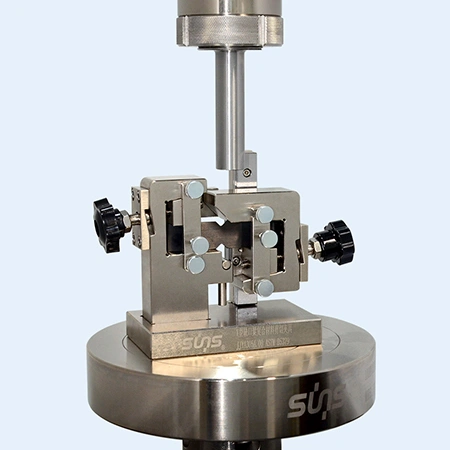
V-Notched Beam/Iosipescu Shear Fixture ASTM D5379
Sandwich and Honeycomb Composite Testing
- Common test methods include ASTM C363 for honeycomb node tensile strength; ASTM C273 and ASTM C393 for core shear; ASTM C364 and ASTM C365 for edgewise and flatwise compression; ASTM C297 for flatwise tensile strength; and ASTM D1781 and ASTM D3167 for climbing drum and floating roller peel tests.
- The tests measure properties such as strength and modulus.
- A dial indicator or extensometer can be used to measure specimen deformation.
Sandwich & Honeycomb Composite Test Fixtures
-
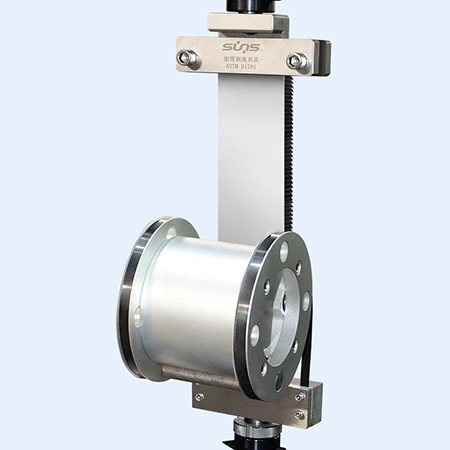
Climbing Drum Peel Test Fixture ASTM D1781 -
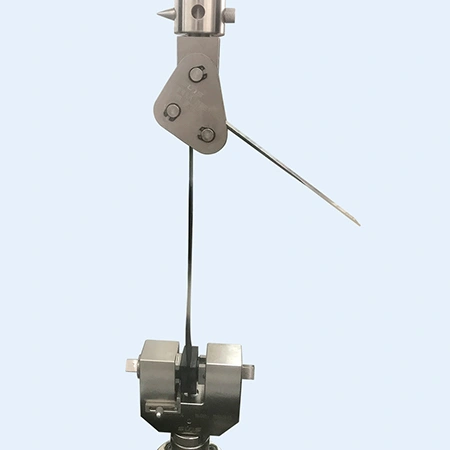
Floating Roller Peel Test Fixture ASTM D3167 -
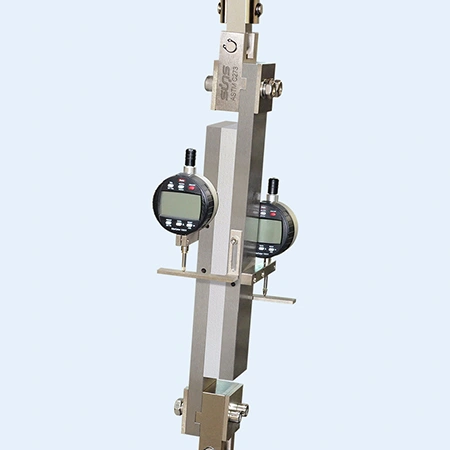
Sandwich Core Shear Fixture ASTM C273 -
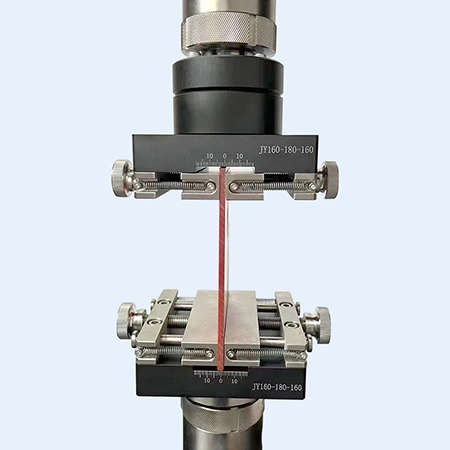
Sandwich Edgewise Compression Fixture ASTM C364 -
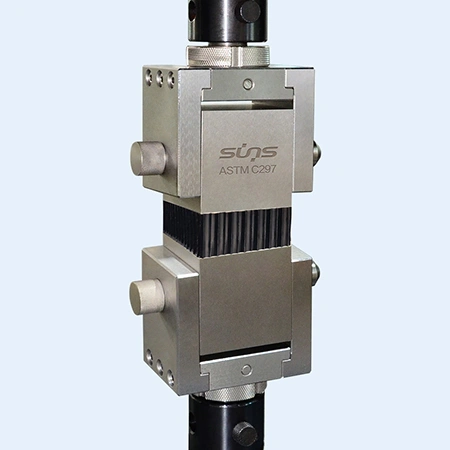
Sandwich Flatwise Tensile Fixture ASTM C297 -
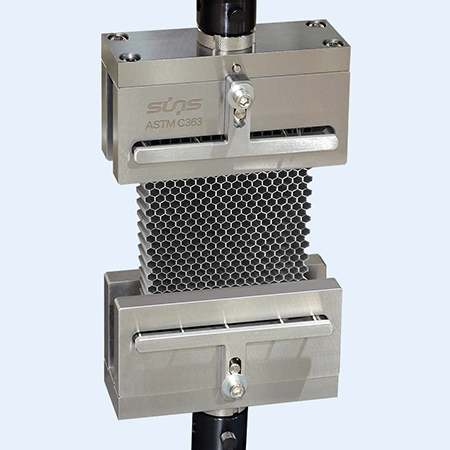
Honeycomb Core Node Tensile Test Fixture ASTM C363 -
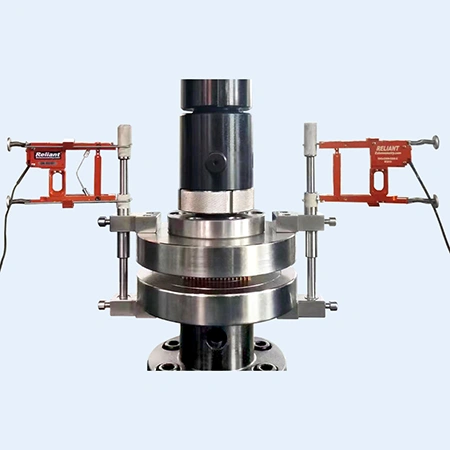
Sandwich Core Flatwise Compression Test Fixture ASTM C365 -
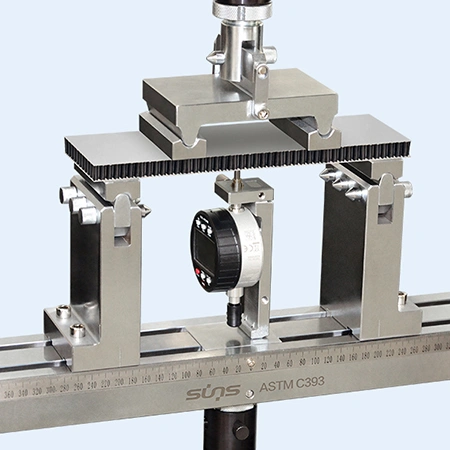
Sandwich Core Shear Test Fixture (Beam Flexure Method) ASTM C393
Composite Interlaminar Fracture Toughness Testing
- Test standards: ASTM D5528, ASTM D7905, ASTM D6671, GB/T 28891, EN 6033, and ISO 15024
- Test methods: Mode I with bonded loading blocks or hinges, Mode II, and mixed-mode I/II
- Measurements: applied load and crack length
- Crack tracking: manual measurement or a non-contact optical measurement system
Fracture Toughness Test Fixtures
-
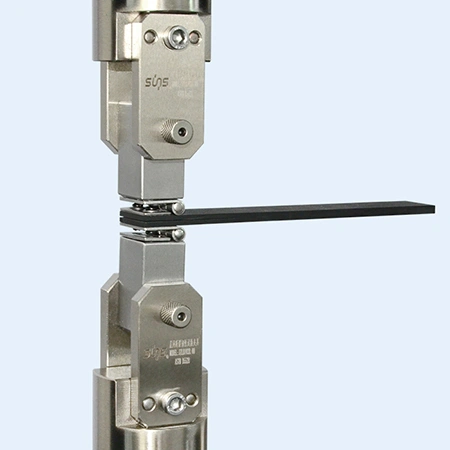
Double Cantilever Beam (DCB) Test Fixture (Mode I) ASTM D5528 -
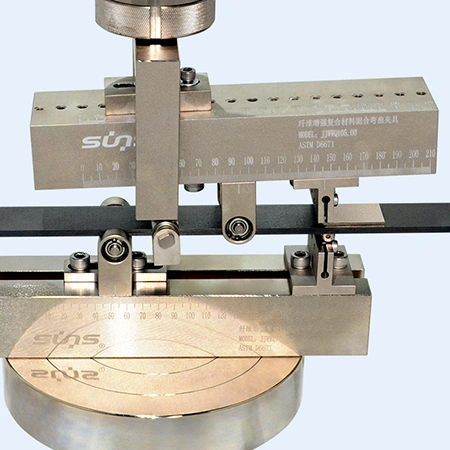
Mixed-Mode Bending (MMB) Test Fixture ASTM D6671
Composite Laminate Bearing Response Testing
- Test standard: ASTM D5961
- Test methods: single-shear or double-shear loading
- Measurements: bearing strain, offset bearing strength, and ultimate bearing strength
- Deformation measurement: bearing extensometer or displacement transducer
Bearing Response & Open-Hole Compression Test Fixtures
-
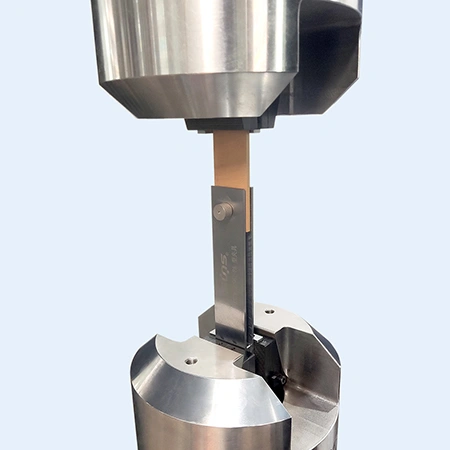
Laminate Bearing Strength Test Fixture (Procedure A: Double Shear Tensile) ASTM D5961 -
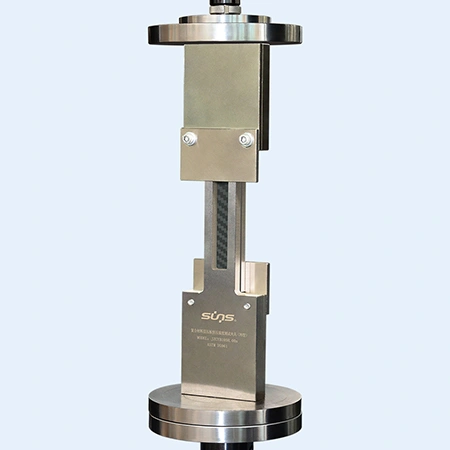
Laminate Bearing Strength Test Fixture (Procedure B: Single Shear Tensile) ASTM D5961 -
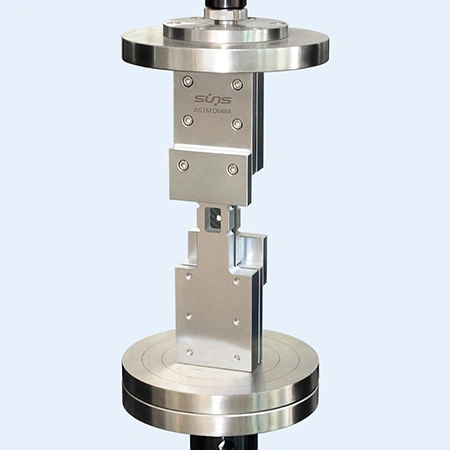
Open-Hole Compression Test Fixture ASTM D6484
Compression After Impact (CAI) Testing of Composites
Compression after impact tests measure how much compressive strength a composite laminate retains after impact damage. First, a drop-weight impactor strikes the specimen with a specified amount of energy to produce controlled damage. Next, the CAI fixture holds the damaged specimen while the testing machine compresses it until failure. The results show how much load the composite can still carry after impact.
- Test standards: ASTM D7136 for drop-weight impact, ASTM D7137 for compression after impact, and GB/T 21239
- Deformation measurement: strain gauges
-
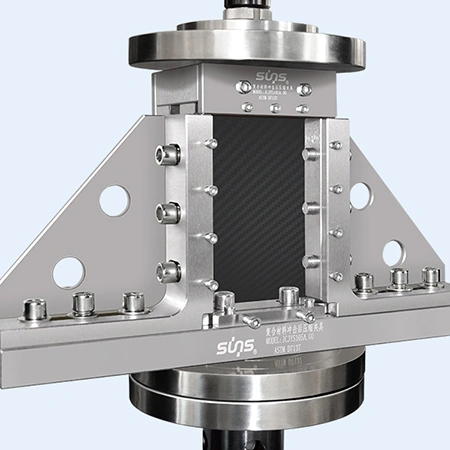
CAI Compression Test Fixture (Compression After Impact) ASTM D7137
Mechanical Testing of Composites at High and Low Temperatures
Environmental chambers reproduce hot and cold conditions to evaluate the mechanical properties of composite materials. Temperature-rated hydraulic wedge grips remain installed when users attach other composite test fixtures, so different tests can be set up without removing the grips. The operating temperature ranges from −70°C to 350°C, with a maximum temperature of up to 550°C.
Composite Test Fixtures for Extended Temperature Range
-
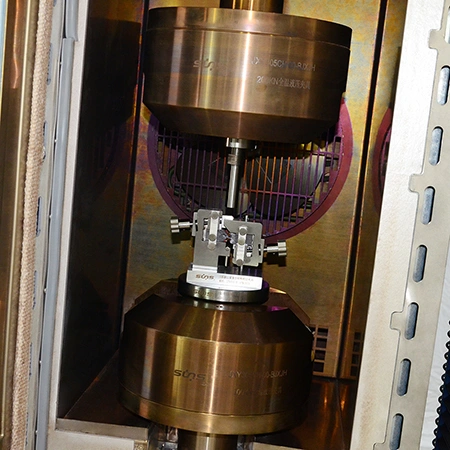
V Notched Beam Test Fixture (Iosipescu Shear Test Fixture) ASTM D5379 -
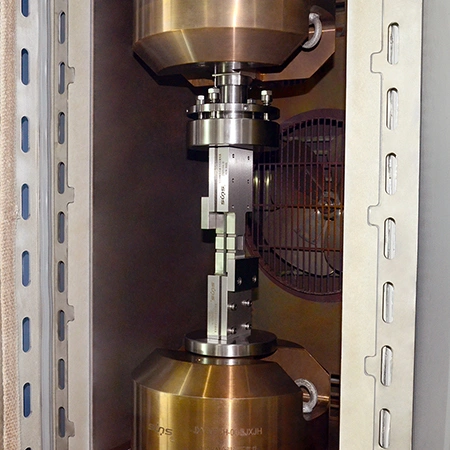
OHC Test Fixture ASTM D6484 -
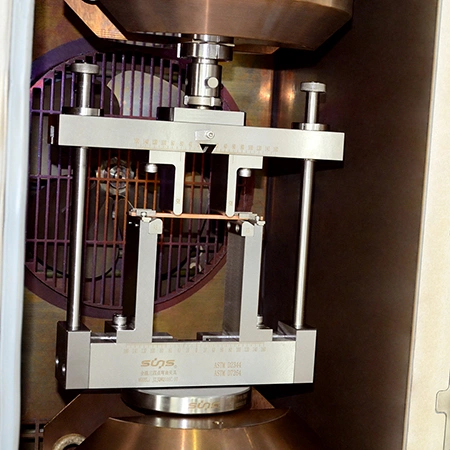
3-/4-Point Flexural Test Fixture ASTM D790, ASTM D7264 -
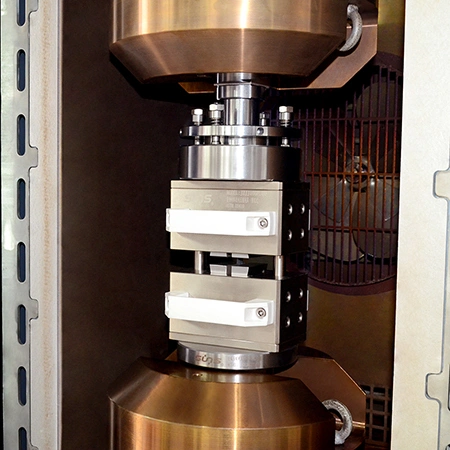
Shear Loading Compression Fixture ASTM D3410 -
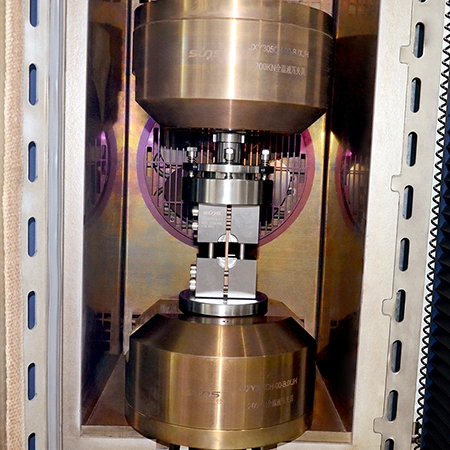
Combined Loading Compression Fixture ASTM D6641
Fatigue Test Fixtures
-
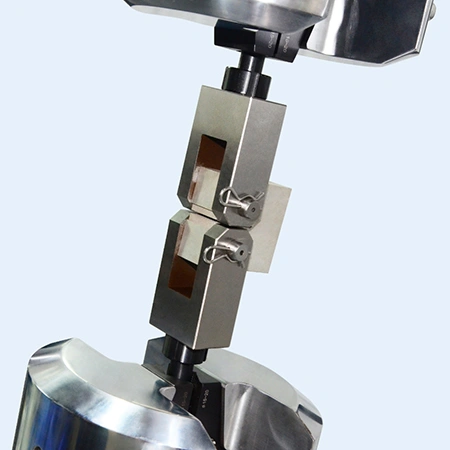
Compact Tension Fixture (Fracture Mechanics Clevis Grip) -
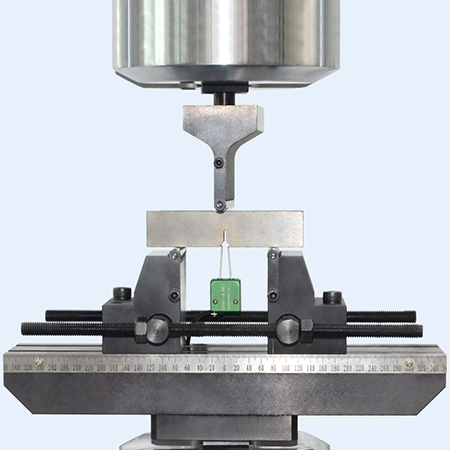
3-Point Fatigue Flexure Fixture -
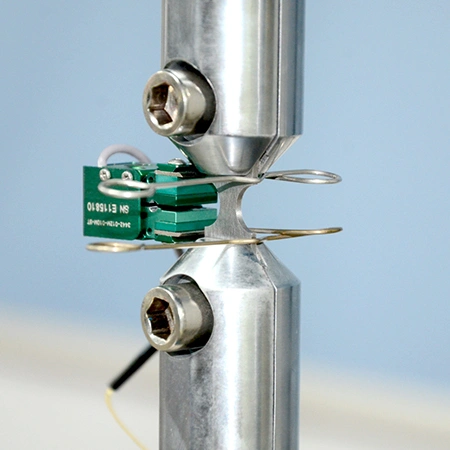
Small Specimen Fatigue Grip for Sheet Metals -
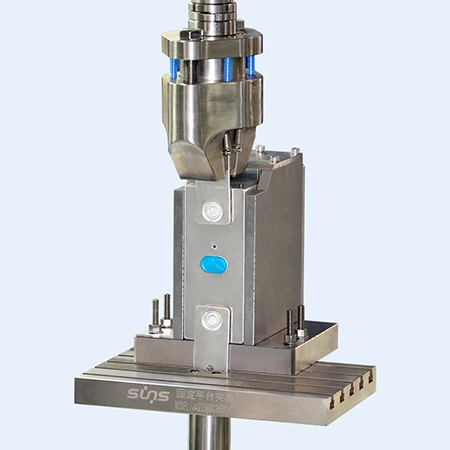
Battery Tab Tensile Grip (SUNS 891 Series) -
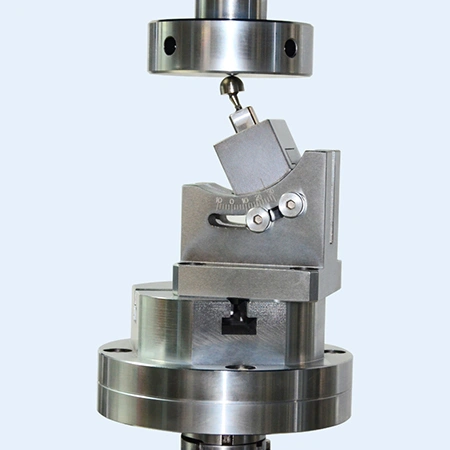
Dental Implant Dynamic Fatigue Test Fixture -
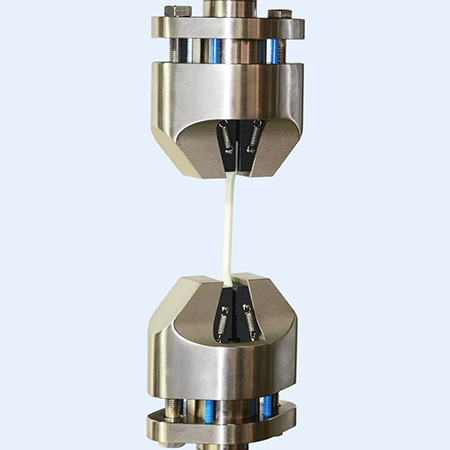
Manual Wedge Action Grip
Additional Grips and Test Fixtures
Download the PDF to view additional specimen grips and materials test fixtures.