Materials Testing Furnaces
High-Temperature Split Tube Furnace (up to 1200℃)
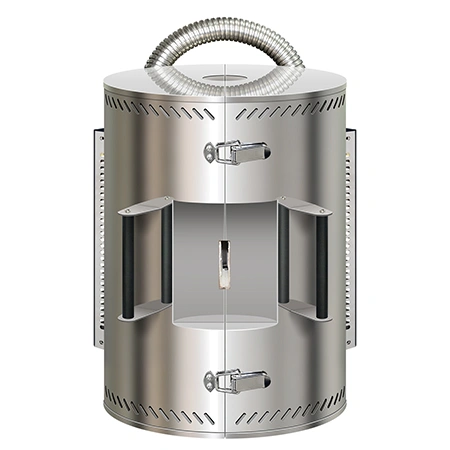
High-temperature split tube furnaces are designed for use with universal testing machines, creep testing machines, and other compatible mechanical testing equipment. They have a split-type chamber that opens for easy specimen loading and removal, while precise temperature control provides test temperatures up to 1200°C. During the test, the furnaces heat the specimen as the testing machine applies the load to assess how composites, metals, and ceramics behave under high-temperature service conditions. They can be used to perform various types of texts, including tensile, compression, bending, and creep tests to the relevant GB/T, ISO, and ASTM requirements for applications in aerospace, wind energy, metallurgy, and research.
- The furnace opens into two halves, which gives users easier access to place and remove specimens.
- Users can set the temperature required for each test, up to 1200°C, and the temperature controller regulates the heat throughout the test.
- These split tube furnaces can work with universal testing machines, creep testing machines, and other compatible mechanical testing equipment.
- Safety features and low energy consumption support daily use, while visual monitoring helps users check the furnace’s operating status.
- Aerospace and wind energy materials
- Metals and metallurgy
- Composites, ceramics, and other non-metallic materials
- Research and quality inspection
High Temperature Furnace (up to 1200℃)
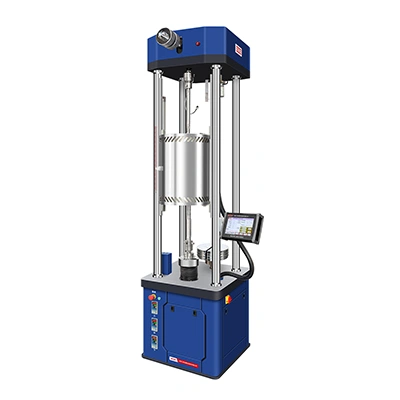
High-temperature tube furnaces work with creep testing machines to test metals and alloys at temperatures up to 1200°C. The furnace keeps the specimen at the required temperature while the testing machine applies a sustained load, so users can measure deformation over time in a creep test or the time to failure in a stress rupture test. Between tests, the electric drive moves the furnace up or down to give access to the specimen without cooling the furnace, avoiding a full cooling and reheating cycle for each replacement.
- Specimens can be replaced without repeating the furnace cooling, heating, and soaking cycle. The stated operating efficiency is more than ten times that of conventional split furnaces.
- The stated service life is 30,000 hours at operating temperatures of 1200°C or below.
- An electric drive raises and lowers the furnace along linear guides for stable, controlled movement.
- Three heating zones distribute heat evenly, while a multi-level, self-tuning PID controller regulates the temperature.
- The compact structure takes up less space in the laboratory.
- Aerospace and automotive manufacturing
- Energy and chemical industries
- Research and quality inspection
- Metallurgy and steel production
High Temperature Furnace (800℃ to 1600℃)
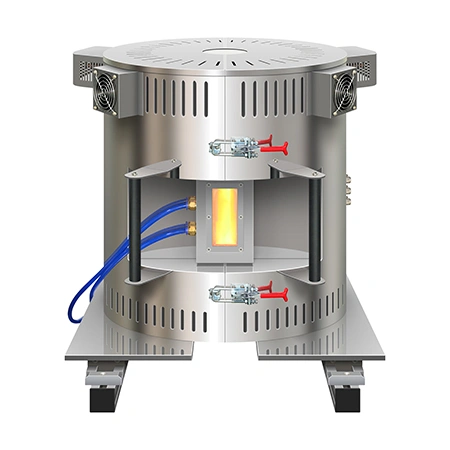
High-temperature furnaces with viewing windows heat specimens from 800 to 1600°C while a separate testing machine applies the load. Users can look through the window to see how the specimen changes, such as cracks spreading or joined materials separating. The furnaces support tensile, bending, and stress relaxation tests that require observation of the specimen at high temperatures.
- The viewing window provides a clear view of the specimen during high-temperature testing.
- Precise temperature control maintains the heating conditions required for the selected test.
- These furnaces can work with different compatible mechanical testing setups.
- Energy-efficient operation and a durable design support repeated use.
- Development of new materials, including ceramic matrix composites and high-temperature alloys
- Quality control for aerospace and automotive materials and components
- Teaching experiments in material mechanics and high-temperature material behavior
- Tests on interface bond strength and crack propagation under high-temperature loading